Saturday, January 19, 2013

Practitioner Notes


*Due to the random and unconventional meltdown of my Macbook pro, which by the way is the farthest thing from ‘pro’, I have to recall, retrieve and adapt the notes I can find on my peers’ blogs as well as from my memory. But hopefully, I can bring forth enough information to suffice for the future when I’m going to be in need of these notes later. Many of my notes moreover were taken by hand on the handouts given by my peers, which I shall show to you, Mrs. Moon on Monday.*

Practitioner Notes:

Peter Brook: Annie, Kevin, Andrew, Joel

HISTORY:
-      Peter Brook was born in England in March 1925.
-      He started his career at a very young age, directing his first production at the age of 17. He directed at Stratford-upon-Avon and had an apprenticeship at a film studio.
-      He moreover founded the International Centre for Theatre Research in 1970. For the first three years, this group of dancers, actors and musicians from many different backgrounds and cultures joined together to try and answer the question: “What were the common stories, the recognizable shorthands, the instant abstractions, the shared outlines of story and character with which an international group could work?”
INFLUENCES:
-      Peter Brook, like many other practitioners, was influenced by a vast array of people.
-      His ideas for his Theatre of Cruelty were deeply influenced by Artaud. It centered to push to emotional, physical and mental limits.
-      How do you portray violence on the stage?
-      Film intrigued Peter Brook and had a profound impact on his life – he was also a film director after all.
-      Merce Cunningham
-      Jan Kott
-      Julian Beck
-      Judith Malina
-      Gordon Craig
-      Brook’s works are also inspired by the experimental works of other famous practitioners such as Jerzy Grotowski and Bertolt Brecht (those names sound sort of/kind of familiar)/
KEY PHILOSOPHIES:
-      A key element of Brook’s philosophies was that theatre should be relatable to the audience’s scopes and life.
-      As evidenced by the International Centre for Theatre Research, he was a strong proponent of theatre colonialism – the idea that theatre could be translated over different cultures and could transcend many boundaries that could be laid out in front of us. Experiment with all styles!
n  Putting acting groups in different environments.
-      Group development is pivotal for the functions of a theatre company and thus the exercises performed prove crucial. This can only happen through living with your theatre group.
-      The location makes the performance rather than the performance making the location. Does that make sense? This also brings to mind a viewpoint of Anne Bogart – how you must utilize the architecture that you are provided with.
-      Like the Andong masked dance that we saw, Peter Brook incorporated the interaction with the audience and really played with that idea.
-      Perform for everyone and make it mean something different for every group of viewers. “What am I doing theatre for?”
-      Make sure you reach your audience, or you fail.
MANIFESTATIONS:
-      King Lear (1962)
n  Worked with trusted actors
n  Experimentation
n  Rehearsal technique
n  Director as designer
n  Simplifying
n  Edward Craig
n  Broken down
n  White light
n  House lights (oooh, very Brechtian as well)
COLLABORATIONS:
-      Royal Shakespeare Company
-      Salvador Dali
-      Paul Scofield
-      Chrstopher Fry
n  Translation
-      John Gielgud
-      Edith Evans
-      Laurence Olivier
-      Charles Marowitz
-      Jerzy Grotowski
THEATRE GROUPS ESTABLISHED:
-      International Centre for Theatre Research
-      Theatre of Cruelty (Royal Shakespeare Company)

Constantin Stanislavski: Austin, Emma, George, Sammy

HISTORY:
-      He was born on January 5th, 1863 in Moscow Russia.
-      At the age of 14 (these practitioners sure do start at a young age), his family turned a wing of their country estate into a theatre.
-      His family and he started their own theatre troupe “The Alekseyev Circle.”
-      He kept a journal of all his performances and reflected on them. He was known to be very self critical and built upon his reflections.
-      For Stanislavski, reality was a key element of theatre that he truly believed in even from a young age.
-      You seek art yourself – no one can teach it but you.
INFLUENCES:
-      Childhood theatre troupe
-      Tomasso Salvini playing Othello in 1882.
-      Mikhail Shchepkin
-      Ernesto Rossi – he told Stanislavski that his acting was in need of art.
-      Stanislavski was influenced by the ideas of a realistic set in 1898 with Hauptemann’s The Sunken Bell.
KEY PHILOSOPHIES:
-      “A system is not a hand-me-down suit that you can put on and walk off in, or a cook-book where all you need to find the page and there is your recipe. No, it is a whole way of life.”
-      Realism – Selection and distillation o observations of daily life; capturing the essence of life.
-      Analysis, perception, experience, objective/purpose, belief, discipline
-      Naturalism – Portray the intricate details of the world and make it seem like it’s actual life.
-      Research your characters!!!
-      All actors must know the subtext of the characters. The actions and words being stated must have a purpose and meaning. The actor is never unengaged and believes in what is happening on stage.
-      Actors should always try to broaden their experiences to be able to relate to the characters they are exposed to.
-      Wherever there is life, there is action; whenever action, movement, where movement, tempo; and where there is tempo, there is rhythm.
MANIFESTATIONS:
-      Vladimir Nemirovich-Danchenko (Moscow Art Theater)
-       Anton Chekhov, the writer of “The Seagull” and Leo Tolstoy, writer of “What is Art?”
-       Chekhov made subtler, emotionally charged projects after he learned upon understanding the implied messages hidden in the writing. This idea was shared by both Stanislavski and Chekhov.
-       Tolstoy influenced Stanislavski, which art had to be simplified and available for all. This helped form the thinking of Stanislavski.
-       The Society of Art and Literature (1888)
-       Stanislavsky, A.F. Fedotov, F.P. Komissarzhevskii, F.L. Sologuh
-       Create a society where they portray acting in a redefining way.
-       Moscow Art Theater (1898)
-       Moscow, Russia’s most valued company
-       Many classic performances all depicting a sense of realism
-       January 17th, 1904 – written by Anton Chekhov but directed by Stanislavski,
-       Cherry Orchard

Bertolt Brecht: Sabrina, Andy, Peter, 

HISTORY:
-      1898: Bertolt Brecht is born in Augsburg, Germany on February 10th
-      1914: World War I breaks out
-      1916: Newspapers begin publishing his work under the title ‘Bert Brecht’
-      1917: At his father’s recommendation, enrolled in a medical course at Munich University
n  Inspired by Arthur Kustcher to study drama and theatre
-      1918: ‘Baal’, first theatrical piece
-      1918: World War I ends
-      1919: ‘Drums in the Night’, second theatrical piece
-      1918: World War II ends
-      1919: Brecht and Paula Banholzer have a son
-      1922: Brecht is awarded the prestigious Kleist Prize for his first three plays
n  “[Brecht's] language is vivid without being deliberately poetic, symbolical without being over literary. Brecht is a dramatist because his language is felt physically and in the round”
-      1922: Married Viennese opera singer Marianne Zoff
-      1923: Brecth and his wife had a daughter, Hanne Hiob who became a successful actress
-      1930: First performance of one of his most famous works, ‘The Rise and Fall of the City of Mahoganny’
-      1930: Remarried with Helene Weigel, who would be the future Mother Courage
-      1939: World War II breaks out
-      1939: ‘Mother Courage and Her Children’
-      1943: ‘Hangmen Also Die!’ first screenplay, first Hollywood film
n  Collaboration with Hanns Eisler
n  Nominated for Academy Award for Musical Score
-      1945: World War II ends
-      1956: Bertolt Brecht passes away on August 14th
INFLUENCES:
-       Family – his family had a large influence on Brecht not only as a person but also as a theatre practitioner
-       Born to a devout Protestant mother and a Catholic father, religion played a large role in Brecht’s life.
-       His mother was the center of his religious teachings; she eventually became the model for the ‘self-denying woman’ who features in many of his works
-       His father was the one to get him into a medical course in university, which was the direct lead into his career in theatre
-       Street Theatre – looking at everyday life, the typical nine-to-five work day, and the absurdity of how people live their lives; this routine and all these rehearsed actions are ones actors must be aware of.
-       The contrast of Mother Courage’s disparity and misfortune to our everyday problems yesterday and tomorrow
-       Changes in the World – looking at the changes in the world; promote non-bias into problematic events that could or have happened in people’s lives
-       World War I
-       World War II
-       Spread of Marxism
-       Influence of Marxism – “order from chaos”; only in utter chaos can the world find order
-       “When I read Marx’s Capital, I understood my plays”
KEY PHILOSOPHIES
-       Due to Marxist influence, Brecht strongly believed in devising new ideas and methods out of chaos – the same went for the ideas of his plays. Order is found in chaos. Answers are found in the randomness.
-       He wanted a theatre where the audience could view the situation on the stage with no personal or emotional connections – so that they could take a moment to see and analyze the happenings – don’t get absorbed in them, but look at them objectively; theatre where the audience thinks critically of the happening events
-       The audience must know that they are watching a play and that the characters are played by actors
-       ‘Verfremdungseffekt’
n  Poorly translated by most into ‘alienation’, the actual concept refers to the use of the stage, lighting, and methodology of a performance to distance the audience emotionally
MANIFESTATIONS
-       Gestus – tableaus or motions that are symbolic of the character using it
n  Mother Courage’s Silent Scream
-       Masks – remove the emotional connection from the audience by removing facial expressions and connections
-       Lighting – have the audience aware that the actors are merely performing by having unnatural lighting; lights are on, even in the audience
-       Set and Stage – all signs of the production are visible to the audience
n  scaffold, equipment, and stage crew are all visible
n  the audience sees the backstage-work and knows it is a stage production
n  often there is no set and only a projection on a screen
n  props are purely optional in Brechtian theatre; pantomime is common
-       Placards
n  highlight situations
n  emphasize key words to the audience
n  characters either hold placards or the captions are projected on a screen
-       Music
n  Bursting into song to, again, prevent the audience from getting too immersed in the play
COLLABORATIONS:
Lion Feuchtwanger
-       German novelist and playwright
-       First collaborative attempt
-       Together, they adapted Christopher Marlowe’s Edward II into a play in 1924
-       “the germ of the conception of epic theatre”
Hanns Eisler
-       Austrian composer
-       Wrote music for several of Brecht’s plays
-       Shared their interest and influence by Marxism
-       They were life-long collaborators
Kurt Weill
-       German composer
-       ‘Threepenny Opera’ (1928)
-       ‘Rise and Fall of the City of Mahagonny’ (1930)
-       One of Brecht’s most famous and controversial works
-       A political-satire
Edwin Piscator
-       Friend and co-creator of epic theatre
-       Reviser of existing philosophies
-       Developer of the set ideas; projected setting, visible scaffolding, etc.

Sunday, November 11, 2012

The Last Days of Postmodernist Theatre

It has been a long and eventful few weeks... And here I was thinking after the Last Days of Judas Iscariot "I'll have so much free time now! I'll be able to go to sleep at eight every night and homework will be done with extreme precision!" In actuality, my last few weeks has been packed with helping the IBTA yr2 girls with their projections and set, watching numerous post modernist plays and finally venturing into the histories and cultures of Turkey. If you couldn't tell already, I have a plethora of things to talk about. So let's begin then shall we?

*I apologize if this blog post is overflowing with inside jokes and perhaps a bit from the Last Days of Judas Iscariot, ArtiFacts and Turkey. I think I use so many little phrases that I expect other people to be aware of, but they always end up looking at me with utter confusion and pointlessness.* 

As per usual, I like to keep to a chronological style of reflection and formatting in the beginning of my posts though at the end it usually results in disjointed thoughts. So, to start, I would like to talk about my experiences in the Last Days of Judas Iscariot. To give an overview, this play basically was formed upon the relationships of Judas Iscariot and Jesus Christ, prince of peace. Ironically, however, it is not a story of Judas Iscariot. Rather, It is a trial of the actions he committed and a reflection of all human beings and the mistakes they can potentially make in their lives. This is what it basically boiled down to for me, even though it's hazy to summarize the depths and messages that this play portrays in a couple of words. What I found particularly interesting was how the different testimonies all offered something new to the table and despite what this discrete message was, everyone was intent on trying and experiencing everything the play exhibited.

There is just so much to say about what I experienced through this journey - as an actor and as a person. In this play, I was blessed to receive the role of Yousef El-Fayoumy, the prosecutor of Judas Iscariot. He is extremely blunt, loud, cheeky, cocky and is a severe opportunist. It was interesting for me as I believe it was the first time that I had a humorous role! It was quite intimidating because with humour, it is almost integral to get a reaction from the audience. At the end of the day, however, I feel like it was the encouragement and endless support from the cast that helped me push through my fears and step over the lines that I hadn't crossed before. It was as much everyone else's role as it was mine.

I found myself, oftentimes, moreover, utilizing the knowledge that we gained through the first quarter in this class into the role of my character. I feel like the workshop with Mark Hill were able to enhance my experiences with the stage to a great extent. I kept telling myself to keep the energy at a high, to be aware of my surroundings not only so I could utilize the stage around me, but also because I had to react to my fellow cast and at everything they were doing or saying and to use violent articulation so that everyone in the back row could hear what I had to say and thus convey messages of the play.

As a person, I can really say that this play posed some questions that I wouldn't have really thought of in the past. It's really helped me grow as a person in terms of maturity and faith. Should we be forgiven even if we can't forgive ourselves? Are there instances where we shouldn't be forgiven? Are humans capable of being good? Is all sin even in the eyes of God? How does God view the human race? What is the difference between ourselves and Judas Iscariot? What is despair and what role does it have in our lives? What holds us back from being good? These are just a few questions that are on the tip of my tongue and that I think really summarizes what I've learned through the play. I think this play was an example of what Peter Brooke would call Holy Theatre. It stimulated thoughts and questions that were there, but I didn't really ask in the past. It helped my relationships with religion and has just played an amazing role in starting my year at SFS.

So as I wrote one part of my blog, I remembered that this blogpost is most definitely not chronological because I watched Post Modernist plays before the actual nights of the play. So I guess I failed once more at this organized thing. But since it is divided into sections, it can still be seen as organized... yes? yes. Anyway, now to move onto some PoMo plays that I've seen. There were some plays that were just phenomenal, some that were just mediocre and some that just confused me. Over 3 weeks, I saw five plays: the Comedy of K, the Odyssey, Inspirations and Improvisations, Gulliver's Travels and finally Black Watch. I chose to watch a lot of plays because I was scared that I would miss something exceptional. Some were definitely better than others, but all in all, I'm happy that I took the time to go to these shows as they offered something completely different in each play.

The Comedy of K was interesting. It incorporated some great dancing, posed some questions through movement and included some themes from Metamorphosis by Kafka. It followed a non-linear story line - the characters did not speak any words and the only thing that was able to guide us were some words that popped up on the sides of the stage - and consisted of a very bare and simple stage with a few props such as a bed and a cool roof that projections were beamed at.

I didn't really understand it at first; actually, I still don't really understand it. But does that mean it's was a bad show? Does it mean it was deadly theatre? No. I actually really enjoyed the Comedy of K because it gave me a chance to step back and just watch a show. I first started to try and understand everything, to try and relate everything to SARS and Kafka's Metamorphosis. But obviously, it was extremely difficult. So I just stopped thinking and started watching. Upon reflection, I was able to recall upon some scorched moments that just blew me away and understand the purpose of them or at least interpret them in a way that made sense to me.

Rather than focusing on black watch, a play that most people seem to be reflecting on, I would like to focus on Parsons Dance, another production that I found particularly amazing. This was another dance show actually and was quite different from the Comedy of K. I would say that the former was more abstract whereas the latter is more straightforward. It centered on two males and one female whilst live singers sung the songs the dancers danced to. Please refer to the video above for my favorite part of the dance - the beginning. We can see how so many of the production elements were infused with each other. The lighting is just amazing in this scene and so is the dancer. How can he move that quickly to match the time? It's just shocking really. The set helps by creating shadows and the costume aids the messages trying to be conveyed. It really puts you in a trans kind of feeling.

The lighting in this play was spectacular. Here's the link to the ligthing designer: http://www.parsonsdance.org/howell-binkley/ Just amazing. You must check him out. It actually made the set in so many ways - like the jail for instance. Everything worked so well together especially the dancing and the singing and the lighting and the dancing. I wouldn't say that this was necessarily so PoMo, but there were diverse elements that could have made it post modernist. Many other plays really wowed me with music. The inspirations and improvisations - Butoh dancer - for example created a really raw and scary atmosphere with the pianist and the cacophonies and clashing of sounds.

All in all, I was so happy to have spent my time and money on these shows. The reason I saw all of these shows was because I was scared that I would miss something spectacular and boy was I right. I really advise all of you guys in the future to attend all shows as you never know which plays will be better than the others. Even then, it is good to see those that weren't as good. :) If you feel me. Black Watch and Parsons Dance will probably be ingrained into my mind as they were just so amazing. Some people were in awe that they couldn't see these two plays, but I did. When in doubt, see all of them.

Wednesday, October 24, 2012

Postmodernist Theatre Notes


Theatre in the WORLD 
Postmodernism and Modern Theatre

  • Words to describe our society: 
    • Norm 
    • Technology
  • Issues in our society: 
    • Individualism 
    • Corruption
    • Equal Rights
    • Sexuality
    • Drugs

  • Po Mo is a reflection of these issues that are posed in our society. 
    • Art is created
    • A way of thinking, and a way of non-thinking
    • Analysis cannot be done using traditional norms.
    • Oblivious to logic, parallels to experiences in life. 

2 ideas to Po Mo: 
  • Homage to itself. Reflection of itself. Art that is about Art. 
  • Revision/re-imagine the works of the past, the director’s own image. 

  • Surrealism
  • Perception is reality? 
  • Po Mo is not about something - It’s about itself. - It deconstructs itself so we can think about the idea of art and the idea of ourselves. How do we view art? How do we view ourselves in relation to the art? 
  • Po Mo comes from anti-realism theatre. 
    • Surrealists or Post Modernists wanted to find higher forms of reality 
  • Method Acting: 
    • Stanislavski - He was sick of it. He wanted to go within and utilize our findings to create emotional memory - realistic
      • Theatre in the time of ^ was so formulaic, so prescribed. 
  • Much more inside out. - Use architecture. 

  • Bertolt Brecht - A genius! The inception of PoMo. Change the relationship between the audience and the actor. 
    • Created a distance between the artist and the audience.
    • The audience is aware that they are in the play - they are not losing themselves in the play. 
      • This is moving towards Post Modernist theatre. 

  • Aristotle: An overarching theme.
    • Po Mo: Symbols, various themes spread out, sensory discoveries and experiences. Celebrating arbitrary juxtaposition, irrelevances. 
      • Hip Hop, Breakdancing, Dj’ing, Rapping, Commercials, Speed Surfing online - examples of Po Mo theatre in our generation.
        • Go against the norm. Leaves room for experimentation 
  • Dadaism
    • You get a group of words and throw it up in the air and retrieve the words 
    • Whatever will happen will happen. 
    • Cabaret singing, shouting, dancing, painting, pulling words out of a hat... 
    • Denied logic and reason
      • This is what led to theatre of the absurd. 
        • Also grew out of Nihilism and post war feelings of loss and disillusionment.
          • Then lead to theatre of alienation. 
  • Picture: This is where it all gets a bit... surreal.

Characteristics of PoMo theatre: 
  • Non-linear theatre.
    • No beg, middle and end. 
      • Stories are jumping around. Temporary flashbacks; starts in the future, to past, to present. --- It’s all over the place. 
        • You have to figure this out. 
  • Open Theatre
    • A much wider range interest in cultures and in individuals that exist. 
      • Joseph Chaiken 
        • His theatre reflected humanity, society (was post vietnam) 
        • Disconnect between actor and character - wanted to create roles rather than characters. “That guy is an actor playing a character.” 
        • Ideas of actors playing scenery and props!
  • A Diverse Theatre
    • Eve Ensler (The Vagina Monologues) 
    • Women have been a force in theatre since the seventeenth century, but before were not involved in theatre.
    • Discusses issues that might have not really been exposed in society in the past. 
    • Racial diversification
    • Gender roles
    • Pregnancy/Abortion
    • Domestic Violence
    • Issues that people avoided finally exposed to society. 
    • 1980’s - 8 women have received pulitzer prizes for playwriting 
      • Sarah Ruhl 
      • Mary Zimmerman 
      • Suzanne Lori Parks
  • Non-Traditional Casting 
    • Black people = black actor - perhaps an Asian actor? 
    • Patrick Stewart - White man played the black Moor Othello. Changed every character black and made Othello white. 
      • Flips character casting on its head
- Sarah Jones - Another example of non-traditional casting. 
    • One woman show - played fifteen different characters from different backgrounds.
      • Exchanges characters and in a split second can alter her characters. 
  • Spectacular Theatre
    • Not the mere spectacle, but the spectacles that just blow your mind away. 
      • Cirque du Soleil/Performance Art
      • Computer graphics
      • Contemporary circus 
      • etc. 
  • A Theatre of Community 
    • Clifford Odets started group theatre. - (Waiting for Lefty)
      • 1930’s - getting people together dedicated to social causes - change the world with theatre.
        • Theatre of the oppressed
          • A large part is ‘dangerous theatre’ 
    • Cornerstone theatre
    • Help the world. Service to the world. 
  • Movement Art and Dance theatre
    • Sound and movement - sensory impact
      • Stomp 
      • Blue Man Group
      • PINA BAUSCH
        • Brought issues, despair into dance
      • Matthew Bourne
  • A Global Theatre
    • Globalization of the word economy 
    • Worldwide proliferation of culture 
      • World wide web
      • Migrations
      • Media
        • It’s spreading!! 
    • Bringing cultures together
    • Multiple tongues
    • Wider focuses
  • A Macaronic Drama 
    • Multi-language
    • Heighten the translation of meaning 
      • Gestures
      • Bodies
      • Implication 
    • Depicts conflicts between culture
    • Assimilation of culture
  • A Theatre of Difference
    • Deals with the topic of homosexuality 
    • Angels in America
      • AIDS
        • By Tony Kushner 
  • Verbatim Theatre
    • You take manuscripts of real live scripts and interviews. 
    • Eve Ensler
      • Created plays that came from rape victims in ____. 
    • Anna Deveare Smith
      • Creates plays by interviewing people
      • She embodies these character
      • She’s not creating a character, she is completely becoming the people she interviews - gestures, raise of the eyebrows, speech
        • in one play she can play 10 people
    • Sarah Jones 
    • Solo performances
      • One man show
      • One woman show
  • Dangerous Theatre
    • Deals with issues that near the edgy areas
    • They ‘cross’ the line. 
    • Nudity (Dangerous. Self explanatory) 
    • Sensory assualt
    • Pushing the boundaries wherever you are. (Can sometimes depend on the setting and context you are in) 
    • Dealing with issues of political torture. 
  • Technology in Theatre
Natasha Tsakos”

“In the art of today, we have become scientists and in the science of today, we have become artists.”

Monday, October 22, 2012

Artitecture.

A space study was recently conducted in a mountainous trail and area near the laboratories of SFS high school. What did these adventurous teenagers and their teacher find out? This blog post responding to certain questions will answer that. But let me give you a hint. It alluded to another time when these students used their architecture to create art with M--- Hi--. Could you guess? Of course you can. Now without further or due, the questions:

This is kind of like the piano that our group faced in the middle of the forest! 


1) What are the artistic moments you don't want to forget? 

The moments from this day were filled with brilliance and change. I would like to start off by saying how different yet how beautiful each and every compilation of tableaus were. They were such exemplar pieces of physical expression that I was able to store them in the 'important section' of my intensely disorganized brain.

Focusing on individual groups, I want to start with the presentation of Kevin, Annie, Austin and Joel. They had the chance to perform twice, and what I particularly enjoyed about these two presentations was how they were radically different from one another. When you start with a rough draft with great compliments and feedback, what do you really do to change it right? This group exemplified that statement false by showing us two beautiful pieces of dead man's theatre (I believe that this is what it was called) that were similar in some ways, but were different in many. I especially like how this group's use of proximity was greatly different the two times they presented. The first time, they played with their proximity forcing us to look back and then front and get a wider perspective of the environment. But the second time, they narrowed it down to the core of their stage. Though their scene consisted of a smaller surface area, they were able to really improve upon their message - how the dead draw in the living and how the living remorse for those who are dead - by using the confined space that they limited themselves to. With that being said, they were truly able to use their architecture in both of these settings to its full potential. They used the hills of the graves, the blindspots to the audience (they could hide themselves and make surprise exits and entrances); they used the lugubriousness of the setting and transferred that into their performance. What really just stands out right now was the amount of energy this group put into their performance. Yes, the imagery was great - everything corresponded with the mood and message - but as the actors fell into their individual pits, they were not afraid to just 'get down and dirty' and really just exert all the effort they could to produce this scene. That's what I find truly spectacular. More than that, the effort they produced bettered our connection with the characters that were produced in their tableaus.

Then, we moved on to the study of Christian, Andrew, Georgia, Emma and Andy. What I first want to point out is their effective (unintentional?) use of music. The euphonic harmonies of the classical guitar and forest settings really allowed us to appease the drama and copious amounts of stress outside of the class and really delve into what was being presented. Not to mention the music fit the piece extraordinarily well. I'm just going to say this: I thought it was hilarious how the girl just sat there even with sweaty teenagers enveloped her surroundings. She just kept playing... What really struck me about this piece was their use of the environment to create costumes and visuals for the viewer. Unlike the other group who had focused primarily on using their backdrop as their themes and conveyances, this group used their ideas to formulate the environment. It was a great contrast and I could see the beauty of both pieces. Their story/message was not linear, but rather an s-shape. It curved and finally got to the conclusion of being stripped naked to the core of the human spirit - then you're left with nothing... At least, that's how I interpreted it. I loved the ambience and nature of this piece so much.

And finally for our presentation, I would like to give a brief account of this performance as I didn't really see my own presentation; I suggest the blogs of my other classmates. But in brief, I really enjoyed our innovative ideas to have the audience move through the trail. I thought we were utilizing the environment perfectly and I liked how our storyline went backwards. I thought the images we evoked - George hanging on a tree as Reca intensely struggled to reach for him; the slow descent watching as the two friends slowly departed from each other as the dead lingered behind the audience (I'm not sure if anyone noticed this, but it happened); Reca banging on the piano as George slowly descends into our beginning scene: death - were quite ingenius and really were able to suit the theme and message that we were trying to portray.

2) What is one thing that you experienced that you hope will inspire or challenge you in the future? 

In the future, there will be many endeavors to create works of art like this. Whether it's for the IB play or for little skits, there will always be an opportunity to utilize what we learned here in the wilderness to our future studies in theatre or in school or in life in general. I hope to take with me the power of 'thinking outside the box,' as I believe that our group was able to really try something new. Experimentation always leads to a great idea. Reca, George, Sabrina and eventually Sammy and I were not able to think of fresh ideas off the bat. I found that it takes time, and sometimes, you won't even get what you want until the last five minutes you are given. It's like in the last five minutes of a test, you're shoved, and all your brilliant ideas just splash onto the paper. I have learned that through numerous confrontations and experiments with a plethora of no-no's and yes's that making ideas comes collectively from the mistakes and conflicts of the group itself. We put forth ideas and built upon each other's and, eventually we had ourselves a show. I would like to take with me the idea of experimentation in my future years to come. I think greatness leads from experimentation. Mrs. Moon once said during a rehearsal in the Last Days of Judas Iscariot how Christian and Sammy's scene was never trite or commonplace, but how it was always different as they were both trying new ways of saying their lines and expressing their emotions. This, I believe, adheres to all elements of theatre - whether in the booth, or on stage or with a paintbrush ready to paint the set.

3) What emotions did you feel as you watched the space studies? 

There were many emotions that passed through my mind during these studies: a sense of anticipation, a sense of anxiousness, a sense of surprise, a sense of regret, a sense of hope. Oddly enough, for a bunch of happy ol' kids, no happiness was expressed in these tableaus. But I want to again focus on the individual groups... You can pretty much tell from what I've described in the beginning that this scene was not a very happy one. It consisted of a longing for death and a self-diagnosed anxiety caused by the death of the loved ones. As those who fall into the pits of loss, they reach for those who remain above them even though it is not their intentions. Feelings of regret and utter despondency conquered my mind therefore, when I saw this study. I'm sure I would put myself into the shoes of Annie - the girl who lost all her loved ones - if my loved ones were to pass away. Detachment can cause utter despair, especially from those who loved you the most.

The second group had more of a less dark message, and yet, it was still quite somber. The leaves in my mind symbolized the layers upon layers of personality and fraud we layer ourselves with. The innocence and beauty of the leaves, as it sheds, turns into a man. But we then begin to realize that man is hope and man is us and that we are all equal in the eyes of God and in the core of our minds and spirits. I think this brought forth feelings of wistfulness and latter contentment.

Again, I will omit our group's presentation as I didn't 'watch' it. But I would say in general that it encompassed a longing and hope for the unattainable which led to frustration and discouragement.

If anything like this hops onto our plates of journeys, I believe that we should write poetry as so much beauty can result from just thinking about these pieces of work.

4) What inspired your space study and how did the stimulus help you design your compositions? 

Many things inspired our space study, but the message that we wanted to portray came from the poem Where Does the Poem Begin, Where Does it End and a surrealist image of a man's inevitably impossible trek along a desert. We wanted to delineate how we could strive for something, but never quite make it there. The journey could most definitely start, but we could never find the ending. In the painting, it shows a man who has covered his face prohibiting him to move on. But it seems that this wasn't inflicted by another man, but rather by himself. We wanted to convey this self-struggle within one's mind and heart to progress and eventually give up. What really inspired our themes and ideas were the poem and the paintings, but the ideas and scenes generally came from experimentation and the environment we were in. The tree branch was perfect for George to hang in, the piano could sort of formulate sound providing a creepy effect, and the long trail allowed us to see every aspect of the tableaus as we trekked through the forest.


OVERALL, there is so much I can take from this class and this study of the space behind our school. We really learned how to create art with architecture: artitecture. I thought that was really clever around an hour ago, but I retract that claim that circulated within my mind. But I really do think that it encompasses the main lessons that I learned here. What I leave with are lessons to do with theatre and architecture, but what I also leave with are scenes of beauty and grace, combined with despair and hopelessness. It was truly an inspiring class to be in.


PS: I would just like to apologize for my blog posts being late... Because of other commitments such as the fall play, I did not have much time to catch up on all the blog posts I would have liked to catch up on. I had notes and rough outlines for what I wanted to write in these blogposts from a long time ago, however. :)


Conflicting Thoughts of Physical Theatre


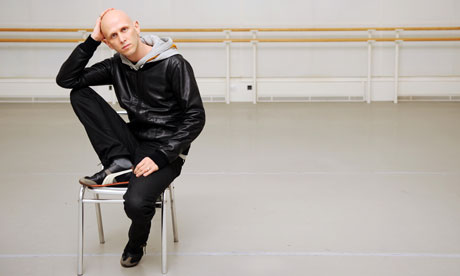
"Wayne McGregor is a man in perpetual motion. When not incubating new approaches to choreography with his company, Random Dance, he creates works for ballet, theatre and opera companies worldwide--including the Royal Ballet in London, where he's choreographer in residence, and contemporary dance powerhouse Sadler's Wells. In ongoing collaborations with psychologists, neuroscientists and cognitive scientists, Random dancers are helping researchers measure and analyze how the brain works in the creative process. Whatʼs emerged so far is that we can, and do, think with our bodies.” - Stolen from TED Talks. 


At this moment in time, when I'm writing my blog, the TED talk that we have just witnessed seems a bit ambiguous to me. Perhaps it's because I'm in a state of nauseating sickness, but nothing seems to click inside my brain. He seems to delve into very metaphorical and perhaps profound (I'm not really sure yet) concepts that I cannot fully grasp. I feel as if this presentation needs to be watched again to fully understand the extremities of his ideas. BRB as the young people say.

...

So, I just watched it again. Parts of it at least... And thoughts are starting to come to me. But as these thoughts come, it's exacerbating the problem of confusion. What exactly is physical theatre because from what I've gained so far, there's no specific way of defining it. Butoh theatre, Masked dance and this all differ greatly in so many ways. I originally thought that physical theatre was just a means of portraying ideas and themes to stimulate the sleeping factory workers inside our minds to start working. But through further comprehension and thought processes, it digs deeper and wider than my previous claims.

Some of McGregor's work..
Indeed many factors of these forms of physical theatre share similarities, but they also contrast with each other well. Mark Hill taught us to localize our bodies and to forget expression; he told us how Butoh theatre was making movements that just encompassed a certain feeling (skin crawling up your spine or how your legs oozed like honey or how your hair was gently being swayed back and forth in a freeing river). He also told us how to make grandiose movements, to keep the energy level up high, to create abstract and literal shapes and to utilize the architecture when performing. The Masked Dance showed us how abstract, subtle movements with defining attributes could form an individual character whose moves could be seen as similar and yet they were so different. And McGregor finally believes in using physical thinking to formulate a dance. To be acquainted with one's body and thus be knowledgeable about how the seem when they move a certain way; to know how many inches your arm extends from your shoulders. This is what McGregor really surrounds in his work.

It's understandable why he works with scientists and neurologists to help them ameliorate their research about physical intelligence. It's a sense of our own bodies in our worlds. He also explores more westernized dance patterns such as ballet, a key difference than the styles of Mark Hill and talchum. He expresses, through his TED talk the beauty of our bodies and how we can sometimes neglect them unless we injure ourselves. His ideas are innovative and refreshing, and at the same time, discrete from what I stereotyped in the past as dance.

I think it would be really interesting to partake in the endeavor of learning to dance like McGregor to really be able to differentiate between Mark Hill's ideologies and his. They conflict at times and go hand in hand at other times. And thus, it would really be helpful for me to actually experience both types of dance. Visualize a T and dance around it.

Overall, I would like to say how much I love physical theatre. Every time I am faced with a performance or learning, I am touched and inspired and amazed. What it is and how it is expressed - this is a thought that hasn't been solidified yet, and maybe it shall remain like that for several more months... As time moves on, however, I think that the ideologies and classifications will clear up as I am exposed to more physical theatre throughout the days to come. In the past, I've seen in the past a film of Pina Bausch, recently seen the Power of K and a Butoh performance and will see Parsons Dance in November. But the possibility of further haziness could dominate as too much exposure to much physical theatre could blur every line of the endless possibilities of what physical theatre has to offer.


Discovering the Beauty of the Korean Countryside.


*Note, due to my sparse knowledge of Korean, I may have gotten some of the information wrong, but I’m pretty sure my recollections are correct to a certain extent* 
The IBTA YR1 class of 2014
Last week, our theatre class embarked on a trip to discover. I think that phrase is really able to encompass our experiences and our learnings throughout our time in Andong. We discovered a Korea and culture completely alien to what we are exposed to in our every day lives; We discovered friendships and more about each other and were able to foster relationships; We discovered a new type of theatre and dug well into its core; We discovered the beauty of Korea that we may have been blinded to in the past. 

We commenced our excursion on what seemed like a short, joyful road trip, trying to coordinate singing and guitar playing. In reality, it actually took us a plentiful 4-5 hours to arrive at our destination. When we arrived, I was astonished by the beauty of our surroundings: the echo of the crickets, the moonlit straw roofs of the hanoks and the freshness of the air. Our walk in the night and the morning further deepened what was for most of us our first traditional Korean experience. The pictures in this post should exhibit the beauty of our experiences. 

During our walk in the morning, Mrs. Moon informed us about a yearly festival that takes place in Andong. She told us how, the mask dancers used the environment - dancing around the trees and using the roads - to create performances for the many visitors that came to experience this culture. She formulated a picture of how people would set ablaze certain things from the mountain as ashes floated down from the mountain to our noses, then a show of fireworks. Unfortunately, this festival took place the week after we visited Andong. 

It's Choraengi (Joel) in the flesh! 
After our leisurely stroll in the village, we visited a few stores, bought some masks and set out for our lesson in (탈춤), a form of traditional Hahoe Korean mask dance. We first began with a lecture on the origins and the types of these dances. Talchum is the original form of masked dance in Korea. It was made to rid the village of evil spirits and a ritual for the Gods. The masked dancers all assemble in a line from the top of a mountain, and descend in a parade down to their area of performance (during special occasions in current time). All the characters within talchum resemble an aspect or prominence of village life. The eleven Hahoe masks are the two lions (Juji), butcher (Baekjeong), old widow (Halmi), the depraved monk (Chung), flirtatious young woman (Pune), nobleman (Yangban), scholar (Seonbi), bride (Gaksi), meddling low-class merchant (Choraengi), and fool (Imae). 

An interesting and unique feature among all these masks is the maneuverable chin. You can portray many emotions by changing the angle of your face to play with the audience’s view. If you tilt your head down, the shadows and placement of chin formulate a more lugubrious aspect; tilt your head up, then you see more of an elated emotion. An interesting story about Imae, a character in the assembly of masks is how he does not have a maneuverable chin. This was because the creator of these masks died while crafting Imae. The legend states how the emperor’s daughter desired to meet and see the man who was rumored to craft these amazing masks. The minute the two met eye contact, they both fell to the ground. Dead. Quite a pleasant story in my opinion. If you couldn’t tell by the tone of my voice which is more often than not incorrectly portrayed through means of text, I am being very sarcastic.

But by digging deeper into this masked dance, we don’t only see its spiritual intentions, we see that this means of performance is for satirical entertainment and to shed light on certain issues that took place in this community. In the mask museum, we saw how many masks were gruesome in their conveyance of corruption - red worts and scars to symbolize evils. We also saw how some masks had red dots, alluding to the times when people suffered from smallpox - another problem those in that time period had to face. 

A key difference between this type of theatre and other types of theatre, moreover, is the interaction made between the actor and the audience. This theatre embraced audience involvement to a maximum extent. Though the actors had a general story line that they had to follow, most of the show involved asking the audience who would like the buy the cow’s testicles and going around and asking for scraps of money. The audience could yell out something and the actors would react. It was quite interesting as this kind of theatre, except for maybe in improv, is not really prominent in western culture (or at least from what I’ve experienced). 

I would finally like to touch up on the physical aspects of this form of physical theatre. We experienced many things that Mark Hill taught us, proximity to the audience, using vision and architecture to create meaning, and violent articulation. But, what I really did not expect from this simple form of ‘dance’ was the arduous work your muscles had to endure to portray a certain character. Energy level 5 is right. To get the movement and grace of your arms to correspond with the steps of your feet were not hard to grasp instantaneously. Simple it may look, but in actuality, I’d rather be doing ballet... No I wouldn’t. But, both are hard. 
 
I feel like I grew so much throughout this trip. My knowledge of what kinds of theatre expanded through the museum and I feel like I am so much more open to the unfamiliar. I now know that Korean theatre, to my surprise, can in fact be entertaining. Beauty is difficult to explain. But when you see it, you know it’s there. I feel like someone said something along these lines to me at some point in my life, but I just can’t really remember who it was. We experienced so much beauty this weekend. I experienced the beautiful nature of the individuals in the theatre class, the antique village, the scenery and the culture (including mask dance) that I remained oblivious to all my life as a Korean. I take with me, not only friendships and bonds that I’ve made with others, but beautiful experiences that remain in my mind still. Thank you Mrs. Moon, Mr. Moon, Mr. Dornbach and Mrs. Dornbach for making this excursion possible! 

Here are a few photos to encompass the beauty that we faced (Creds to Emma and Joel for the photos) 


I just want to say for this photo that I love old people and everything about them. They are amazing. And a photo like this just makes me want to cry. The effort the put into their lives is inspiring. How connected they are to their cultural roots is inspiring. 


PS: I just realized how I started off with a chronological blog post, then changed it so that it would not have any chronological sense whatsoever. The sequence of the events at Andong go: walk, sleep, walk, lecture, movement lesson, lunch, show, walk around. Or at least something like that. 
PPS: Videos of Talchum to come.